
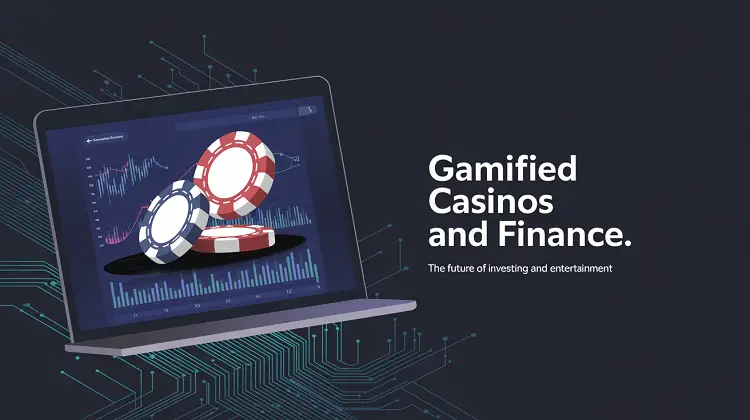
The gaming industry is experiencing significant changes, especially in the casino sector. A lot of modern gaming sites have turned online gambling into a full-blown experience, trying to match up with the same experience in a physical gaming arena. Modern platforms also leverage user data to personalize the gaming experience, recommending missions, badges, or challenges based on individual behavior patterns. They now include some elements you would normally see in video games like player points, badges, missions, and even leaderboards.
The incorporation of these elements is what is called “gamification”, and it’s a strategy designed to make users stay longer and keep coming back to play. Sweepstakes online casinos, for example, have adopted this model. These are gambling platforms that operate legally without requiring real-money deposits. This innovation has a few things to say about money. The gamification techniques that work here mirror the same behavioral patterns seen in financial decision-making.
The Psychology of Small Wins
Incentives drive behavior, and one of the first things anyone would notice in gamified casinos is how quick they are to give rewards. Users instantly get a welcome bonus when they sign up, stick around for a while longer, and get a level upgrade or something similar. These small, frequent rewards aren’t accidental; they’re designed to improve engagement. These small wins also trigger dopamine responses in the brain, the same chemical involved in motivation and pleasure. This neurological feedback loop is a powerful driver of repeated behavior.
Casinos have learnt the art of frequent, small rewards, and they capitalize on that a lot. They’re designed to give players regular mini-victories, aside from the bonuses, that keep them engaged. You might lose $25 overall, but the small wins you get along the way keep you going.
This same principle applies to personal finance. Many fintech apps, including budgeting and savings apps, now use a similar strategy. They found that customer engagement improves by 48% when gamification is part of the user experience. They give users badges for reaching savings goals and also give small perks for hitting milestones. The psychology is exactly the same: if saving feels like a win, you’re more likely to keep doing it. Instead of setting one big target like “save $50,000”, break it down into smaller achievable amounts. For each milestone you reach, a small mental reward is created, and that is what makes you want to do it all over again just for the thrill that comes with achieving something. In this case, you’re using the reward system to your advantage. You’re basically gamifying your financial success, and on your terms.
Risk Is Easier to Take When It Feels Like a Game
When placing a $20 bet in a traditional casino, it mostly feels like you’re making a serious financial decision. In a gamified one, you’re more likely to feel different about it because that same action could come wrapped in an attractive package like fireworks and a message that says “you’re just one spin away from hitting the jackpot!”. All of a sudden, it doesn’t feel like spending anymore; it feels like playing. Many platforms also use virtual currencies or tokens instead of real money, which psychologically distances users from the concept of “spending.” This detachment makes it easier for players to take bigger risks, often without realizing the real-world implications.
In digital environments, people are more comfortable making risky choices when it is gamified. This can be seen when progress bars or missions are involved. No one wants to stop halfway to a reward.
In finance, this could play out in credit card points, “limited-time” stock picks, or trading apps that use confetti and sound effects when you buy a share. It feels exciting, but even though it is your money on the line. One important financial skill to pick out from this is to always remember that gaming is for entertainment, not as a source of income. When making financial decisions, seek the advice of a professional.
Timing and Pacing
Gamified casinos carefully control the pace at which every game is played, and when rewards are given. The games move in a way that maintains excitement but at the same time allows enough anticipation to be built. Urgency-based triggers like countdown timers or “limited-time offers” are also commonly used to push immediate actions. In finance, recognizing these artificial urgency tactics is key to avoiding impulsive decisions. They understand that both boredom and overwhelm will drive players away.
Personal finance often suffers from poor pacing. It’s either that people ignore their money completely or obsess over daily market fluctuations. None of these approaches leads to good outcomes.
Create a sustainable rhythm for your financial life. Instead of checking your account daily, reviewing your budget after every purchase, or rebalancing your portfolio quarterly whenever the news gets scary, create a system that works. You can review these things weekly, monthly, and quarterly. This measured pace prevents both neglect and overreaction.
Skill vs Luck
Casinos give players control. Choosing what slot machines to play, when to hit or stand in blackjack, or which numbers to pick in roulette are all in the hands of the player. Although the outcomes from these are largely random, having these choices is what makes playing meaningful. Gamified systems also offer clear feedback loops—like instant updates on progress or visual representations of skill mastery. This encourages users to keep learning and improving, which can be applied in finance by tracking financial literacy or investment skills over time.
It keeps players engaged because it means that skill matters more than luck while playing. If you’re skilled, then it means you’re likely to win more often than those who simply rely on luck. In personal finance, many people feel like they have no control over their financial outcomes, so they don’t see the need to try to improve their situation or become skilled through learning. In reality, they’re relying on luck instead of skill.
You can’t control market crashes or job layoffs, but you can control your spending habits, savings rate, and investment choices. Focus on the variables you can actually influence through informed decisions rather than worrying about economic factors beyond your control.
Social Proof and Community
One common feature that a lot of modern gamified casinos, especially online platforms, emphasize is the community feature. Players can see what other players are winning, create leaderboards, and basically make gambling feel like a social experience. This taps into the deep need for social validation and belonging.
For most people, sharing their goals usually creates a sense of obligation that increases commitment and makes them want to follow through with that goal till the end. This social component is often not heard in traditional financial advice, which treats money management like something to be done in isolation.
To have a sense of community for finance, consider joining investment clubs, finding accountability partners for your savings goals, or using apps that let you share financial milestones with friends. The social element that makes casinos engaging can make budgeting and investing more compelling too.
However, the same social mechanisms can also trigger harmful behavior, such as overspending or risky investments driven by the fear of missing out (FOMO). Being mindful of your own financial goals—rather than comparing with others—is crucial.
Also consider having friends with a higher socioeconomic status than you. Research has shown that people are more likely to save money or invest in the stock market if they have wealthier friends. For every 10% increase in high-earning friends, the chances of saving money went up by 5%, and the chances of investing rose by nearly 3%.
Conclusion
The casino industry has figured out how to influence human behavior around money. Their techniques are effective mostly because rather than work against our natural psychological tendencies, they work with them. By understanding some of these techniques and principles, you can build new, good habits around how you manage your finances.